Life Lessons from Inside an Orchestra
By Sandy Seufert, Program Director
March is Arts Education Month so it seems like an ideal time to reflect on the impact of the arts when we make it together. According to Americans for the Arts, arts involvement not only helps to build individual identity, but group solidarity as well. Our children need these opportunities, now more than ever.
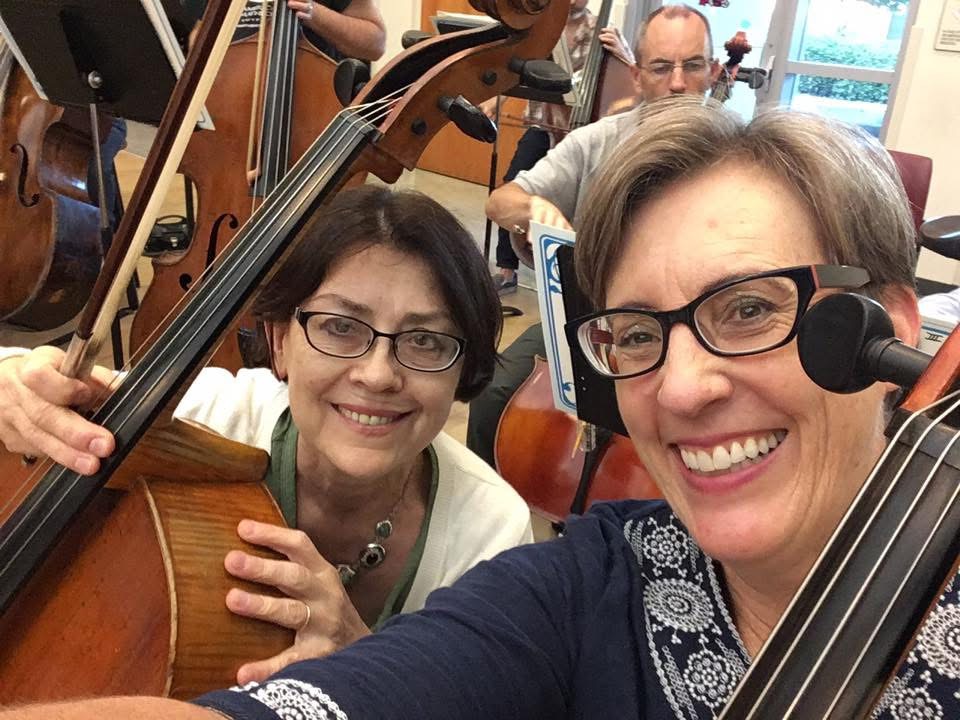
An ensemble (the word literally means together) is a term for a group of people working together toward some kind of a performance (ie: dance, theatre, music). I had the honor to play the cello with The Culver City Symphony for many years, playing mostly classical, opera, and jazz music. It is my belief, or even conviction yet, that being part of an ensemble teaches incredibly rich and lasting life lessons. Here are three lessons I learned from the cello section.
It’s not all about you.
While that sounds like something you might say to a teenager, the lesson for me continues to be profound and helps me to be a team player invested in the best result for all. While it does take a lot of experience and training to play in a symphony orchestra, the most important skill I learned was how to listen (not just to myself) but to the sound of the whole section and the whole orchestra. The ability to listen, calibrate, blend, and become something greater than yourself, is both exhilarating and spiritual. How important is the awareness of being part of something larger for our children? Very.
Trust the process.
Let’s face it, sometimes things are hard. I can think of certain musical pieces that felt insurmountable and sometimes it felt that no matter how much I practiced, I wouldn’t make it past that section without wiping out, kind of like slipping on a patch of ice. However, sometimes there was something almost miraculous that would happen when I would trust and let go. How many times do we psych ourselves out, anticipating failure? I learned to trust myself and to trust that the sound of the group would carry me through. And here’s something interesting: I sometimes would play my best when I was sick and didn’t have enough energy except to let go and trust. Hmmm! Now, imagine if young people developed a sense of trust and confidence that didn’t need so much external validation, but rather were driven by an innate sense of value and purpose. Ensembles do that.
Let it go.
You have heard the statement that time is relative. Well, nothing could be closer to the truth when it comes to playing music. Performing arts often have a temporal aspect, meaning they occur over time (versus a static image) and the exciting part of performing is that pretty much anything can happen. And things do happen – mistakes! Yes, even with professional musicians, mistakes occur, but you have to let it go at that moment. Focusing on a mistake for even a second completely bends time and the focus is lost. You can’t go back in time for “do overs” and you have to keep going. This has been an incredible life lesson in self-forgiveness and perseverance. Children today, perhaps more than ever, struggle with the ability to manage mistakes.The ability to let small mistakes go and to keep going are instrumental (to use a musical word) for mental health. Ensembles teach that too.
Turnaround Arts California holds a commitment to the value of arts education in the lives of our children. When we support schools and teachers to invite children to make art together and perform together, we are also equipping these children to have important and transferable skills, like what happened for me. I am still performing, I am still learning, and I will forever be grateful to the life lessons I learned because of the arts.
Related Resources to Explore:
The Benefits of Music Education: PBS outlines research demonstrating how learning music facilitates learning other subjects and enhances life skills
How Children Benefit from Music Education in Schools: This article on how children benefit from music education in schools, cites dozens of research studies and articles
Preparing Students for Successful Futures: Former student at a Turnaround Arts Partner School, Sara Burke Baker, shares how engaging in music better prepared for the future